Where Does Minnesota Pull-Tab Money Go?
“Pull-tabs support local charities” is a familiar phrase in Minnesota. But it can sound as though the full price of every ticket goes directly into a donation jar.
The actual picture includes prizes, the cost of conducting the games, taxes and spending for purposes allowed under Minnesota law.
Understanding those different pieces helps players see the charitable-gambling system more clearly—without confusing ticket sales with donations.
Start with ticket sales
For paper pull-tabs, the starting point is the money collected from ticket purchases.
You may see the term gross receipts in gambling reports. This describes sales activity before subtracting prizes.
That number is not the same as the amount available for charitable spending. A large sales total should not be described as though the organization kept every dollar.
There is another reason sales totals can be much larger than the original money players brought with them: players may use winnings to buy more tickets. Those additional purchases create more sales activity.
Prizes return money to players
Winning tickets account for a substantial part of the money moving through a pull-tab operation.
Reports distinguish sales from prizes and the amount remaining after prizes. That remaining amount is commonly described as net receipts.
The important distinction is simple:
Ticket sales are not the same as money raised for community causes.
Before evaluating charitable impact, look beyond the headline sales figure.
Conducting the games costs money
A regulated gambling operation has operating costs.
Games and equipment must be obtained, sellers need support, records must be maintained and the operation must account for its money.
Minnesota uses the term allowable expenses for qualifying costs of conducting lawful gambling. Not every expense an organization might incur automatically qualifies.
For official guidance, consult the Gambling Control Board’s Allowable Expenses section.
For players, the practical takeaway is that operating a pull-tab counter is not cost-free. Some of the money remaining after prizes supports the work required to conduct the games.
Taxes are part of the picture
Gambling taxes and other applicable obligations also affect the money available to an organization.
This creates an important reporting distinction: lawful-purpose expenditures are broader than direct charitable donations.
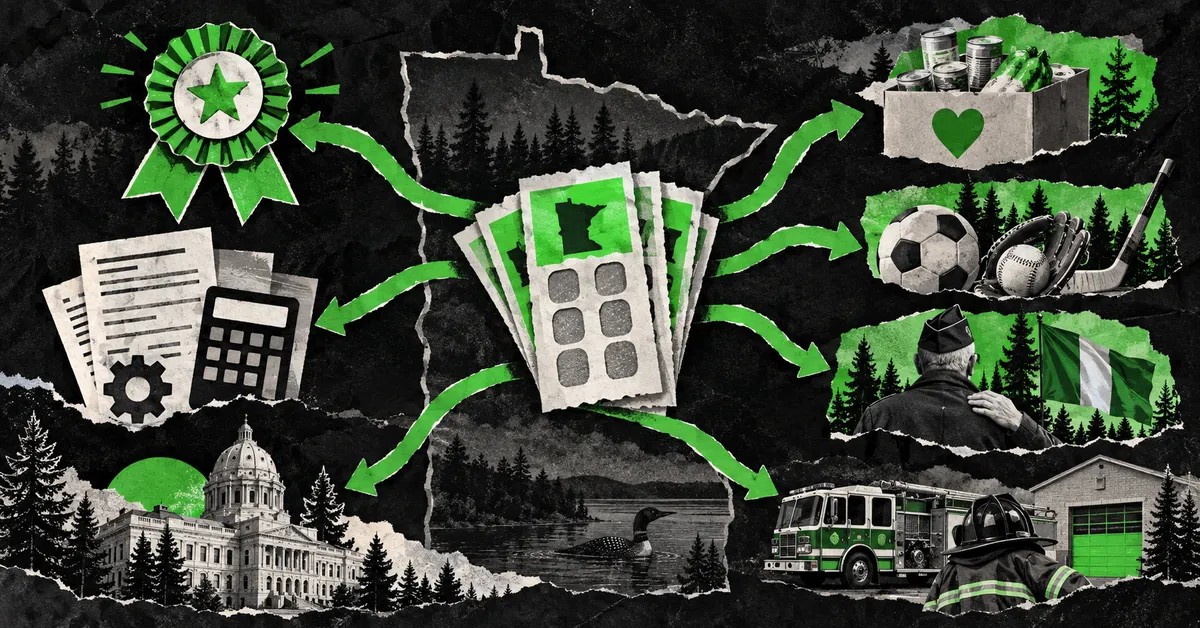
The Minnesota Gambling Control Board explains that lawful-purpose expenditures include charitable contributions, payments to local government, lawful gambling taxes and certain building expenses associated with veterans and fraternal organizations.
That means a reported lawful-purpose total should not automatically be described as money donated directly to community programs.
You can review this explanation on the Board’s Organization Annual Report Summary page.
What are lawful purposes?
Lawful purposes are uses of gambling funds permitted under Minnesota law.
An organization’s mission and its eligible expenditures influence how funds are used. The details matter: a worthwhile-sounding expense is not necessarily permitted simply because someone calls it charitable.
This article is an introduction for players, not expenditure guidance for organizations. Organizations should use current official requirements when making spending decisions.
Does every organization use its funds the same way?
No. Organizations differ in their missions, operations, expenses and reported spending.
Two locations in the same city may be associated with different nonprofits. Understanding which organization conducts the gambling gives you a better starting point for learning about its impact.
The Gambling Control Board publishes annual organization reports with income, allowable-expense and lawful-purpose information. These reports are more useful for evaluating a particular organization than a broad slogan about statewide gambling sales.
Always check the reporting year. Annual reports describe a completed period, not necessarily what an organization is doing today.
Can you trace one ticket to one donation?
Usually, a player cannot connect a specific ticket purchase to a particular donation.
The purchase becomes part of the organization’s overall gambling operation. Its financial records account for sales, prizes, expenses and expenditures.
A more accurate description is:
Your ticket purchase participates in a charitable-gambling operation that pays prizes, covers permitted costs and obligations, and can support qualifying charitable and community purposes.
That is more precise than saying every ticket dollar goes directly to charity or stays in the neighborhood where it was spent.
Buying tickets is different from donating
A pull-tab purchase gives you participation in a game of chance. A direct donation supports an organization without requiring you to gamble.
If your main goal is to support a particular cause, look for the organization’s official donation process.
You do not need to keep playing—or spend beyond your budget—to help your community.
How to learn about the organization behind a location
Start with these steps:
Find the organization name associated with the games.
Check the organization information shown in the Tabsy Wins finder when available.
Visit the organization’s official website or public social page.
Review the Gambling Control Board’s annual organization reports.
Distinguish charitable contributions from broader lawful-purpose expenditures.
Check the reporting year before drawing conclusions.
Remember that the venue and the nonprofit conducting its games may be separate entities.
What Tabsy Wins helps you discover
The free Tabsy Wins Minnesota location finder helps you explore places offering listed gambling activities and see source-listed organization information when available.
Search by location name, city, ZIP code, charity or your current location. Use the game filters and review available venue details before visiting.
The finder is a starting point for discovery—not a guarantee about how much a particular purchase benefits a cause. Use official reports when you want to understand an organization’s financial results.
Play within your own budget
Charitable gambling is still gambling. Supporting a nonprofit does not remove the possibility of losing money.
Treat ticket purchases as entertainment spending. Decide what you can afford before playing and do not increase that amount to chase losses.
Tabsy Wins is an information and discovery tool, not a gambling operator.
If gambling is causing concern for you or someone you know, Minnesota’s Problem Gambling Helpline is 800-333-HOPE.
Official references
Minnesota Gambling Control Board: Organization Annual Report Summary
Minnesota Gambling Control Board: Allowable Expenses
Minnesota Gambling Control Board: Charitable Gambling Manual